Monday, 10 April 2017

10/270 - North Greenwich

North Greenwich roundel on
the Eastbound platform,
7th April 2017
Sandwiched between Canary Wharf and Canning Town, North Greenwich is the only London Underground station on the Greenwich Peninsula. With over 26 million users each year, North Greenwich is the 25th busiest London Underground station and the fourth busiest station to be served by just one line, with Vauxhall, Brixton and Canary Wharf being the three busier stations to be served by one line. The station forms a range of transport services including the Emirates Airline, Riverboat services and a large bus station.


The underground station opened in 1999 and is served by just one line, the Jubilee line. North Greenwich is another example of stations that opened on the Jubilee line extension. However, the station is closer to Charlton than it is to Greenwich, so how come the name? Despite being nearer Charlton, the station is located in the northern part of the Royal Borough of Greenwich. If you are going to a Charlton Football Club match at The Valley, the ground is two miles away, it would be quicker to get the 161 bus from the nearby bus station at North Greenwich. The station is designed to be able to handle 20,000 passengers an hour, this is important for the nearby O2 Arena, originally known as the Millennium Dome, or simply just The Dome.

The O2,
7th April 2017
Of course, The Dome is a major reason for why you might want/need to use North Greenwich station. The O2 arena can hold 20,000 people for concerts and sporting events, and is actually the worlds busiest music arena, with 1,064,92 tickets sold in 2015. Since 2012, visitors have been able to walk along a 190m fabric walkway over the building, offering views of the Olympic Park, Canary Wharf and Royal Greenwich. 


Access to the river Thames
North Greenwich is one of just seven London Underground stations to feature Riverboat services on the London Underground map, and also the furthest east to do so. MBNA Thames Clippers provide a regular service between North Greenwich and Westminster/London Eye, and North Greenwich and Woolwich (Royal Arsenal). These services provide commuters and tourists with quick and relatively inexpensive transport along the Thames, with a bar, toilets and plenty of seats. The North Greenwich pier is also served by other slightly slower tourist services. 

Entrance to the Emirates Airline at
North Greenwich,
7th April 2017
Emirates Greenwich Peninsula
The Emirates Airline is located a five minute walk away from North Greenwich station. There is a love/hate split over the 'cable cars' which opened in 2012. However, that being said, the 1 km cable car offers views over East London, with the city centre in the distance. 1.4 million people used the service in 2016, which is roughly 3,888 people a day. With an Oyster card it costs just £3.50 to ride the Emirates Airline, which is great value for money if you want to use it as a tourist attraction. However, as a form of transport for local residents or regular commuters, critics claim that it is an expensive river crossing. Critics also suggest that it is in a poor location, this perhaps reflects the low usage. Have you been on the Emirates Airline? If not, I suggest you do, if not for the views, but just to say you have done and tick something else off of the London bucket list. 

Platform screen doors on the
eastbound platform,
7th April 2017
North Greenwich blue's tiling in the interior make the station unique. The blue-tiled interior was designed by Alsop, Lyall and Stormer. The platforms also feature platform screen doors, a common feature of the Jubilee Line Extension, for added safety. This feature also enables users to predict where to stand, as they can see where the train doors are. It is predicted that TFL will introduce this technology to more stations in central London for "safety and reliability". 


If you have not visited North Greenwich station, I ask you why not? The station is spacious, the blue tiling is striking and there are many different transport opportunities to explore. The Emirates Airline is a unique experience, the first urban cable car in the United Kingdom. The MBNA Thames Clippers is a relaxing, quick and different way to travel throughout the capital, giving views of central London, East London and Greenwich. Whilst I prefer the London Underground, the MBNA Thames Clippers are an exciting way to see, travel and explore the city. 

More photos
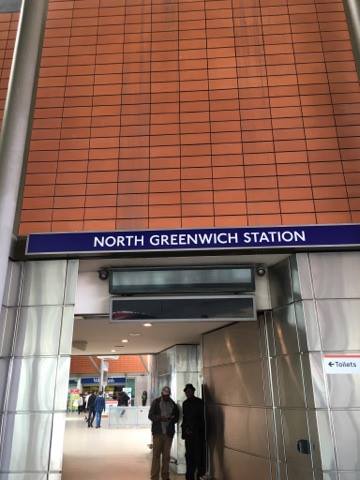
North Greenwich exterior,
7th April 2017
Emirates Greenwich Peninsula,
7th April 2017


Emirates Airline,
7th April 2017

For more London transport photos follow my Instagram account, tubespottingdan. If you have any questions, please do send them in and I will answer them in my next blog post. 

Tuesday, 4 April 2017

9/270 - Canary Wharf

The impressive main entrance
to Canary Wharf,
4th April 2017
From yesterday's visit to the least used station on the network to one of the most used, Canary Wharf is the busiest station to only be served by one underground line. Canary Wharf is the tenth most used station on the London Underground with over 54 million passengers a year, and the only underground station on the Isle of Dogs, home to the major business district of Canary Wharf. Exciting times are coming for the area with arrival of Crossrail, or the Elizabeth line as it will be known, in December 2018.


Escalator from the ticket hall
to the main entrance,
4th April 2017
Canary Wharf opened in 1999 as part of the Jubilee Line Extension. Before the Jubilee Line Extension, Jubilee line stations terminated at Charing Cross, but part of the extension meant that trains diverged from Green Park to Westminster instead of Charing Cross. The station is important to the increasingly expanding Canary Wharf business district, with the user ship being mainly used by commuters. As a result, the station is extremely busy during peak hours, and all 54 million annual passengers cram onto the Jubilee line. The station, designed by Norman Foster, is often referred to a cathedral. Canary Wharf is so large mainly to accommodate with the expected 50,000 daily passengers, however, in 2006 it was recorded that 69,759 people on average use the station on weekdays, 20,000 more than the station was originally expected to accommodate.  

The DLR is an important
service to the Isle of Dogs,
4th April 2017
The most used station served by one line?
It is important to recognise that Canary Wharf is only served by one London Underground line. Although passengers change to interchange with the Docklands Light Railway (DLR), this is a separate station. In fact, if you want to change for the DLR at Canary Wharf, it is quicker to do so at Heron Quays, as it is slightly nearer to the entrance of the Jubilee line station. The second most used station on the network to be served by just one line is Brixton on the Victoria line, with 30 million annual passengers. 


The impressive DLR
station,
4th April 2017
The Docklands Light Railway
Although Canary Wharf is the only London Underground station in the Isle of Dogs, the DLR plays an important role in providing transport for East London, linking Greenwich, the Isle of Dogs, Stratford, London City Airport and 'the city' together. 19 million people use the DLR from the Canary Wharf station each year. The station is served by three tracks, as trains go from Bank to Lewisham, and Canary Wharf to Stratford. Platforms 1 and 2 serve the Northbound three car service to Bank from Lewisham, whereas platforms 5 and 6 serve the Southbound three car service to Lewisham from Bank. Platforms 3 and 4 serve two car services running to Stratford via. Bow Church. Heron Quay, the closest DLR station to Canary Wharf London Underground station, is used by just under 8 million people each year. The platforms are elevated and is situated inside an office building. 

A taste of the future
The new Crossrail station
at Canary Wharf,
4th April 2017
Crossrail will open at Canary Wharf in December 2018, and it will provide a much needed service to the business districts. Crossrail, or the Elizabeth line, services will run between key hubs at Heathrow, Farringdon and Liverpool Street to allow commuters to access these key transport services. With around 20,000 excess passengers using the station each working day, all using the Jubilee line, Crossrail will provide extra support to the area. Interestingly, just like Heron Quays is the closest DLR station to the Jubilee line station, West India Quay is the closest DLR station to the new Crossrail station. You can see the impressive new station waiting to be open, with a lovely roof garden. Just take a quick walk across Crossrail Place to have a glimpse at what is to come. Crossrail does have its critics, but I believe that the Elizabeth line will be important to the capital, and I cannot wait for the railway to begin to open in May this year between Liverpool Street and Shenfield, taking over the existing TFL rail services. 

The largest roundel at
platform level on the entire
London Underground
network,
4th April 2017
A cathedral in a tube station
Canary Wharf, despite being so busy during peak times, is a well-loved station. A YouGov poll in 2013 saw users voting the station as the "Most Loved" on the London Underground, with a Londonist poll in 2012 seeing the station as the second "best underground station" behind the impressive Westminster station. A reason why Canary Wharf is so popular is how spacious it is, and the platform edge doors allows passengers to accurately judge where to stand for the train doors. There are five entrances to the station, two in the shopping centre and three surface buildings. However, a fact that makes Canary Wharf unique are the roundels, which are the largest at platform level on the network.


Personally, Canary Wharf is my fourth favourite station. I am currently working on a blog post for next week ranking my top 10 stations, this will swap and change as I explore more of the London Underground. I appreciate Canary Wharf's and the Jubilee Line Extension's design, a display of modern engineering. The only negative I have with Canary Wharf is how Crossrail, the DLR and the Jubilee line stations are spaced.

However, if you work or frequently travel through the area, why not visit the new Crossrail complex, or as much of it as possible. I predict that once the new railway is open the roof garden will be a lot busier, so visit it now whilst it is quiet.

More photos
Roof Garden on top of the new
Crossrail complex,
4th April 2017
Westbound Jubilee line
platform,
4th April 2017


Escalator from the platforms
to Canary Wharf ticket hall,
4th April 2017
If you want to see more photos of transport in London, follow my Instagram account, tubespottingdan. Have you got any questions? Please send them in and I will answer them in my next blog post.

Monday, 3 April 2017

8/270 - Roding Valley

Roding Valley roundel,
3rd April 2017
Today I visited a station most people have never been to, Roding Valley, the least used station on the London Underground. Around 260,000 people use the station each year, Waterloo gets more than that daily. Roding Valley is the least used station by around 300,000 passengers, as Chigwell is the second least used station with 560,000 passengers annually, and Grange Hill is the third least used station with 660,000 annual passengers, all three of the least used stations are the three stations between Woodford and Hainault on the Central London.


Roding Valley opened on the London Underground in 1948, although the area has had a longer history with railways. The station initially opened in 1936 by the London & North Eastern Railway, although tracks were originally placed as early as 1903. Although staff are apparently on site 24 hours a day, there is no staffed ticket office, and is one of just twelve stations on the entire network to not have ticket barriers. The station takes its name from the nearby river Roding.

A to scale diagram situating Roding Valley
The least used station in 'London'  
Despite not being in 'London', Roding Valley is still in zone 4. The station is actually in the county of Essex. Roding Valley is situated halfway between Woodford and Buckhurst Hill on the part of the Central London heading towards Epping. However, despite being about 200m from that part of the line, Roding Valley is the first of stations from Woodford to Hainault. This section on average receives three trains an hour, and these services tend to only serve Woodford, Roding Valley, Chigwell, Grange Hill and Hainault. 

What was the user ship at Roding Valley on my visit?
View of Roding Valley from the
footbridge,
3rd April 2017
Admittedly I visited Roding Valley in the afternoon during off-peak hours, but I was still surprised to be the only passenger getting off at the station. When I got off, nobody else got on. I then had to wait 20 minutes for the next train to Chigwell, in this time, nobody else joined me on the platform, there was one other passenger on the Eastbound platform waiting for the train to Woodford. When the train eventually arrived to take me to the next station, Chigwell, two passengers got off the train, but I was the only person to get on. It was surprising that during a period of 20 minutes, just four people used a station on the London Underground. 


The footbridge at Roding Valley,
3rd April 2017

As always, I attempt to point out the little details that make each station unique, and that is why the London Underground is so special. Roding Valley appears to be just an average 1930's station, you really do get the sensation you are not in London at all, which is true. It was not until I was on the Central line train heading West towards Chigwell before I realised just how far out of London I am, as I saw Canary Wharf as a blur on the horizon. Other than a slightly curved platform, a lovely, but common footbridge, and a glimmer of the more frequent trains running from Buckhurst Hill and Woodford, there is nothing that stands out at Roding Valley. However, if you enjoy the London Underground, Roding Valley is an experience.

The chances are you have never been to Roding Valley. I ask, why not? On a lovely sunny day, like today, take a trip out of London, away from the hustle and bustle of the city centre, and just enjoy and marvel at how wonderful and unique the London Underground really is. 


More photos
Train at the Eastbound platform
heading towards Woodford,
3rd April 2017
Roding Valley exterior,
3rd April 2017


Panorama of Roding Valley from the Westbound platform,
3rd April 2017 
My train to Hainault
arriving,
3rd April 2017


If you like trains, the London Underground, or both, are you following my Instagram account? If you are not, follow tubespottingdan on Instagram for photos and videos of my journey around the capital as I attempt to tick off all 270 London Underground stations.

Friday, 31 March 2017

7/270 - Oval

Roundel at Oval station,
9th February 2017
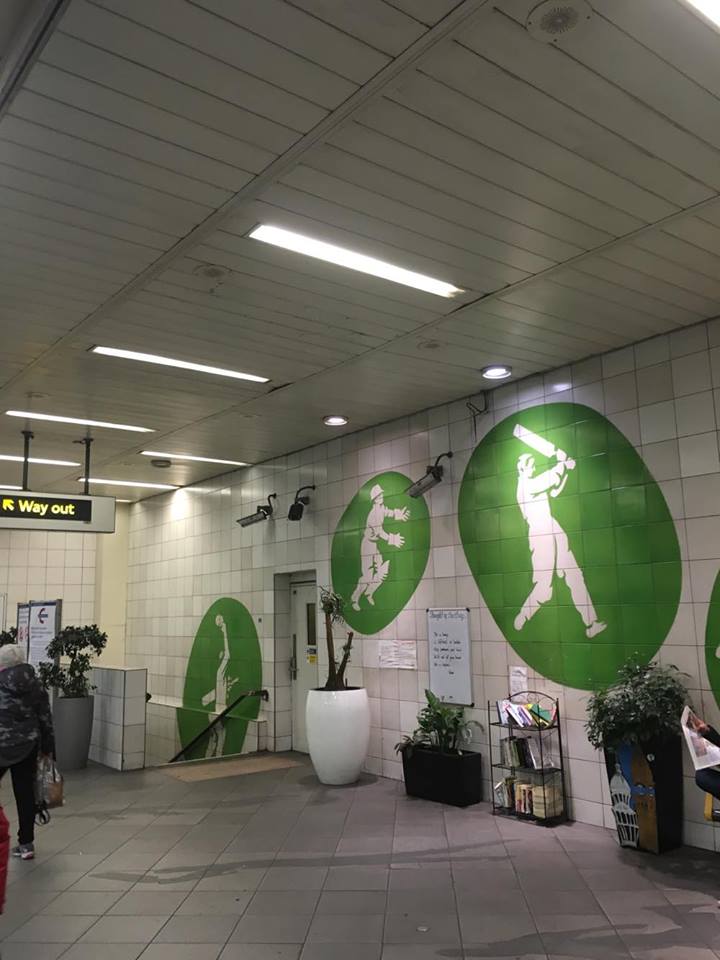
Oval is one of just two stations on the entire network that is just four letters long. Situated in zone 2, Oval station is a gorgeous station that serves the nearby Oval cricket ground, which holds 26,000, and has provided cricket since 1845. Just under 7 million people use the station each year, and they will note how lovely the station is, from the tiling in the entrance area, to the uplighting on the escalator and to the music played in the concourse.


The station opened when the City and South London railway ran services between Stockwell and the now closed King William Street in December 1890. This line would become the Northern line, for a brief overlook at the brief history of King William Street see my article of Borough station, which like Oval, opened in December 1890 further north along the line.

Kennington Park
The Oval Cricket Ground,
9th February 2017

Kennington Park is one of London's oldest parks, opening in 1854, and is home to cricket history. The park hosted cricket matches between 1724 when London played Dartford, and 1785. However, cricket was reintroduced to the park in 2002, which is supported by Surrey County Cricket Club, who are based at the nearby Oval cricket ground. Some of you will be asking, why are you talking about Kennington Park on a blog post on Oval station? Well, it is because Kennington Park is closer to Oval station than Kennington station.


Tiling at Oval station,
9th February 2017
Oval's unique design?
Oval station once sported a lead-covered dome at the top of the lift shaft. If you want to know what Oval looked like with the dome, visit Kennington station, one station north on the Northern line. This is a similar situation to Borough station which also originally had a dome on the station building. Oval station got its unique tiling scheme in late 2007 and early 2008 as the station was modernised. Internal tiling at Oval station features large images of cricketers, there is uplighting on the escalator, and during my visit to the station classical music was played. This technique is often used to discourage loitering. I am not sure if music is played all the time, but it was a welcomed touch on my visit, and another reason as to why I find the station fascinating. 


If you have never visited Oval station, I strongly advise that you do. From the tiling, to the music played and gorgeous uplighting, Oval station is one of my favourite stations I have visited so far. Kennington Park and the surrounding area is equally as nice as the station. 

More Photos
Oval station interior,
9th February 2017
Northbound platform at
Oval station,
9th February 2017


Oval station interior,
9th February 2017
Escalator at Oval station,
9th February 2017


For more photos of the best of the London Underground follow my Instagram, tubespottingdan. 

Monday, 27 March 2017

6/270 - St. Paul's

Eastbound platform at
St. Paul's station,
28th February 2017
Originally going to be called Newgate Street, St. Paul's station is the 14th busiest station to only be served by one London Underground line, the Central line. The station is used by both commuters and tourists for St. Paul's Cathedral and the Millennium Bridge.

St. Paul's is one of the original stations to be opened by the Central London Railway when they started running services from Shepherd's Bush to Bank. The station opened with the name Post Office, as the headquarters for the General Post Office was located near the station. The General Post Office closed in 1912. It was not until 1937 that the station got the name we know today, St. Paul's. The railway station near Blackfriars was initially called St. Paul's, it was not until that station was renamed before St. Paul's could become St. Paul's.

Different level platforms at St. Paul's
station, 28th February 2017

Different level platforms
St. Paul's is a unique station, as the Westbound platforms run above the Eastbound platforms. To access the lower Eastbound platforms you have to go down an escalator. So far this is the first example I have found of tracks of the same line running at different levels within a station. Perhaps St. Paul's is the only station where this occurs? I will endeavour to answer this question by visiting all 270 stations. 


St. Paul's Cathedral,
11th May 2011
What is there to do in the area?
Another aspect of visiting all 270 London Underground stations is to point out interesting things to do near the tube station. Sometimes they are more obvious like Craven Cottage is near Putney Bridge, or the obscure little 'secrets' such as the tinseltown diner at Gants Hill. One of the best known attractions is obviously St. Paul's Cathedral, but if you work near St. Paul's or a tourist in the area and you are fed up of boring lunches such as sandwiches, go to Pilpel in Paternoster Square and enjoy a pita that is filled to the brim with salad, felafel, hummous and chickpeas. 


"To street" sign at St. Paul's
station, 28th February 2017
Design
One of the most interesting little details regular users at St. Paul's station may miss is the lovely "to street" signs at the base of one of the escalators up to the station entrance. 

St. Paul's station is a busy station at the heart of the City of London. However, there are lots of little details to look out for. Have I missed anything? If I have, drop them in the comments. 


More photos

Eastbound platform at St.
Paul's station,
28th February 2017

Sunday, 26 March 2017

Stations that opened in March

Bakerloo line 1972 Stock,
9th February 2017
Each month I will look back at which of the 270 stations opened in the same month. Thirteen stations on the network opened in March, with the Metropolitan District Railway (which would become the District line) extending from West Brompton to Putney Bridge in March 1880, and the Baker Street and Waterloo Railway (which would become the Bakerloo line) opening between Baker Street and Lambeth North in 1906. 


1880 - Fulham Broadway
Stamford Bridge before Chelsea
V Manchester City,
18th April 2016
Fulham Broadway opened in March 1880 as part of the expansion of the District Railways from West Brompton to Putney Bridge. Originally named as Walham Green, the station got the name we know today in 1952. The original station building was rebuilt after just 25 years in 1905 to accommodate for the newly formed Chelsea Football Club who play their home matches at the nearby Stamford Bridge. Originally being able to house over 80,000 spectators, since 1876 Stamford Bridge has been an important stadium in London, the closest to the city centre. The station would have a new building again in 2003, when Fulham Broadway Shopping Centre opened. It is expected that Fulham Broadway will have more redevelopments when Chelsea expand Stamford Bridge from 41,490 to 60,000 by 2021.

Have I been to Fulham Broadway?
Other than Mile End, Fulham Broadway is the station I have visited the most. As a Chelsea fan, I have used this station countless times. A tip for those going to Stamford Bridge is that after the match it is best to walk to Earl's Court to avoid the crowds trying to go to Fulham Broadway. 

1880 - Parsons Green
South of Fulham Broadway on the District line is Parsons Green, which also opened in March 1880. Although there are just two platforms at Parsons Green, there is a complex array of seven sidings. Parsons Green was part of the proposed route for Crossrail 2 until 2011. Instead a new station will be built north of Parsons Green called King's Road Chelsea, which will be the only new station to be built as part of the Crossrail 2 project. 

Have I been to Parsons Green?
When I went to the Chelsea victory parade in 2015, I was going to go to Parsons Green station after because it is close to Eel Brook Common. However the station was closed due to the high number of people trying to use the station.

1880 - Putney Bridge
Putney Bridge platforms,
14th February 2017.
Putney Bridge is the last of the stations that the District Railway opened from West Brompton to the then terminating station at Putney Bridge in March 1880. Putney Bridge, like Fulham Broadway, is located near a major football stadium, Craven Cottage, the home of London's oldest football club, Fulham. When the District Railway extended over the river Thames to East Putney and onto Wimbledon in 1889, Putney Bridge no longer became a terminating station. 

Have I been to Putney Bridge?
I have been to Craven Cottage six times and subsequently visited Putney Bridge on each of those six occasions. It is not just the football that attracts me to Putney Bridge. It is a station rich in character, next to the lovely Bishops Park, and home to London's oldest football club. 

1906 - Charing Cross
Trafalgar Square in May
2016,
14th May 2016.
Charing Cross has had an interesting history since opening in 1906 as Trafalgar Square. The Northern line opened a station called Charing Cross in 1907, this station had other names Charing Cross (Strand) and Strand. When the Jubilee line opened in 1979, the Bakerloo line station (Trafalgar Square) and the Northern line station (Strand) combined together to form the Charing Cross station, as we know it today. 


Have I been to Charing Cross?
Charing Cross is the nearest station to Trafalgar Square, an iconic London landmark that I have visited many times. A favourite memory was after watching the Women's FA Cup final in 2016 at Wembley, I decided to go to the Lord Moon of the Mall, a pub near Trafalgar Square. After getting out the station it was a surprise to see 1000's of Grimsby Town celebrating reaching Wembley for the non-league play off final on Trafalgar Square. 

1906 - Lambeth North
Lambeth North was the original terminating station of the Baker Street & Waterloo Railway. The station was originally called Kennington Road until the station was renamed Westminster Bridge just over four months after opening. It was not until 1917 that the station got the name we know today, Lambeth North. When the Bakerloo line reached Elephant & Castle in August 1906, Lambeth North was no longer the southern terminus. 


Have I been to Lambeth North?
Not yet. But it is on my list to visit in early April. Follow my Instagram, tubespottingdan, for updates of stations I visit.

1906 - Piccadilly Circus
Piccadilly Circus is the 14th busiest station on the entire network. The station opened when the Bakerloo line initially ran stations between Baker Street and Lambeth North. In the future, Piccadilly Circus is a proposed stop on Crossrail 2. The station is famous for its circular concourse beneath the surface, and the World Clock situated on the concourse.

Have I been to Piccadilly Circus?
The station serves a tourist hot spot in the middle of central London. I have visited the station numerous times for Regents Street, Shaftesbury Avenue and Carnaby Street. 

1906 - Regent's Park
Going to see the penguins at London
Zoo? Don't go to Regent's Park station,
go to Camden Town,
28th August 2015
Regent's Park is one of only four stations on the Bakerloo line not to have a station building. 28 trains per hour serve the station. A common fact about Regent's Park is people use the station when visiting ZSL London Zoo as it is in the park, however, if you are visiting the zoo, get off at Camden Town, as the zoo is closer to that station. Interestingly, when the Baker Street and Waterloo Railway was granted permission to be constructed, a station at Regent's Park was not allowed by parliament. However, this was changed in 1904, just two years before the line and station opened. 

Have I been to Regent's Park?
I believe I went when I was really young, but because I cannot remember visiting, I have not counted this as one of the stations I have visited before 2017. 

1906 - Waterloo 
Waterloo underground station is the busiest on the network with over 95 million people using the station each year. Although the station did not get a London Underground line until 1906 when the Baker Street & Waterloo Railway opened, the first underground services ran from Waterloo to the present day Bank station, this would become the Waterloo & City line we know today in 1994. In 1926 the station got served by a new line, which would later become the Northern line, before the Jubilee Line Extension in 1999. 

Have I been to Waterloo?
I have been to Waterloo countless times. Tourists often use this station for the nearby London Eye, as well as being a busy commuter hub. 

1907 - Marylebone
Marylebone is another station that opened on March on the Bakerloo line, but opened a year later in 1907 when the line extended one stop north from Baker Street to what was then called Great Central. The station was originally going to be called Lisson Grove, but changed its name to Marylebone in 1917, however the name Great Central is still in the tile work at platform level. The station remained the terminus to the Baker Street & Waterloo Railway until June 1907 when Edgware Road opened. 


Have I been to Marylebone?
Not yet, however, like Lambeth North, it is on my list of stations to visit in early April. 

1915 - North Harrow
Although the Metropolitan Railway ran services through North Harrow since 1885 with its extension to Pinner, it was not until 1915 that North Harrow opened. On average, the station is served by 8 trains an hour going north bound, and 8 trains an hour going south bound. However, 'fast trains' at peak times do not stop between Harrow-on-the-Hill and Moor Park, ignoring Northwood, Northwood Hills, Pinner and North Harrow. 

Have I been to North Harrow?
The metropolitan line is perhaps the line I have least frequently used, along with the Bakerloo line, and I have not yet been to North Harrow.


1933 - Oakwood 
Oakwood is situated one station south of terminating Piccadilly line station Cockfosters. Oakwood is another example of Charles Holden's influences on the Piccadilly line. The opening of Oakwood in 1933 is associated with rapid growth and development to the area. When the station opened in March 1933, it was the terminating station of the Piccadilly line as services didn't start running to Cockfosters until June that year. Oakwood was originally called Enfield West, before being called Enfield West (Oakwood) in 193, until 19 when the station name dropped Enfield West entirely and is the name we know today, Oakwood. 


Have I been to Oakwood?
Despite being one of Charles Holden's classics, I have not yet visited. 

1933 - Southgate
Southgate is one station south of Oakwood on the Piccdilly line. The station is another of Charles Holden's classics, the station has a structure on top resembling a Tesla coil, with a central column in the ticket hall supporting the umbrella like roof. Although the station has always been called Southgate, two names were considered before the station opened, with Chase Side and Southgate Central proposed as station names. 

Have I been to Southgate?
Not yet, however, visits to the stations north of the Piccadilly line are planned for next month. 

2008 - Heathrow Terminal 5
The latest of the stations to open in March is Heathrow Terminal 5. Terminal 5 at London Heathrow Airport opened in the same year with both rail services and Piccadilly line services serving the station. There are two other stations on the Piccadilly line which serve the airport, these being Heathrow Terminals 2&3 and Heathrow Terminal 4, but unlike these two stations, Heathrow Terminal 5 station is entirely staffed by Heathrow Express Staff. 

Have I been to Heathrow Terminal 5?
Not yet. However, a cool fact about Heathrow Terminal 5 is you can ride for free between the station and the other two stations at Heathrow Terminals 2&3 and Heathrow Terminal 4. You still have to tap in with an oyster card or contactless card, but you will not be charged. You can even travel from Heathrow Terminal 5 to Hatton Cross, change at Hatton Cross and go to Heathrow Terminal 4 and still not be charged. 

Remember to follow my Instagram, tubespottingdan for regular updates and photos of all things associated with the London Underground. Next month I will be looking back at the 17 London Underground stations that opened in April, with the Bakerloo and Northern lines opening the majority of the stations in 1917 and 1940 respectively. 

Wednesday, 22 March 2017

5/270 - Farringdon

Farringdon station exterior in 2017,
21st March 2017
Despite being one the original stations to open on the London Underground in 1863, Farringdon station has changed quite a lot of the years, but still regains a certain type of character. 7 million people use national rail services from Farringdon each year, and it is the 18th busiest railway station in the capital. Exciting times are ahead for Farringdon, as when Crossrail opens here in 2018, it is expected the station will be one of the busiest not only in London, but in the UK. With Crossrail trains running every 2 and a half minutes, Thameslink and three London Underground lines, Farringdon will become a major station for the capital. 
Circle line train leaving
the Westbound platform
at Farringdon,
21st March 2017


Farringdon opened as an original terminus for the first London Underground line, known as the Metropolitan Railway, which ran services from Paddington to Farringdon with stations between being; Edgware Road, Baker Street, Great Portland Street, Euston Square and King's Cross St. Pancras. In modern times, Farringdon is served by the Metropolitan line, Circle line and Hammersmith & City line, making the station the 29th busiest on the London Underground network.


Roof at Farringdon station,
21st March 2017
One of the most dominating features at the station is the roof, which was completed in 2015. Three major developments are currently in operation at the station, one of them has already been mentioned, Crossrail. Another development is part of the Thameslink programme, an upgrade to the route to enable more frequent and larger trains, this is expected to finish next year. The Four Lines Modernisation is the third development in place. This is the re signalling of London's four sub surface underground lines, three of which serve Farringdon; Hammersmith and City line, Circle line and Metropolitan line. The fourth line is the District line, but no District line services call at Farringdon. 

Cool Fact
Once all three of these upgrades have been completed by 2023, 200 trains per hour will call at Farringdon, this equates to one train every 20 seconds somewhere at the station, whether it be a Crossrail train, Thameslink train or Underground train.

Farringdon is a station filled with history, yet the station, in 2017 it is still as important to the capital as it was when it opened in 1863. 

More photos 

Farringdon station entrance,
21st March 2017

Platforms at Farringdon,
21st March 2017


Roundel at Farringdon,
21st March 2017
Have any questions? Send them in and I will answer them in my next blog post. Remember to follow my Instagram account, tubespottingdan, for more pictures.